Overview
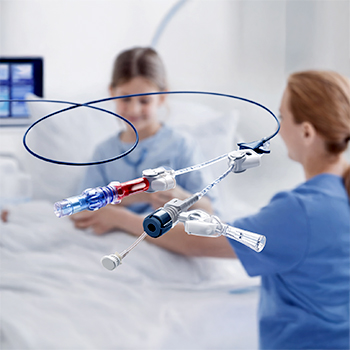
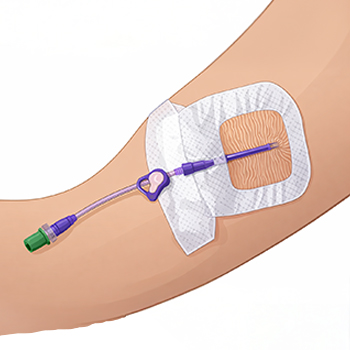
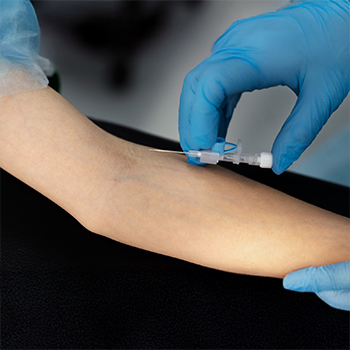
The PACE Program is a competency development initiative by 3M Healthcare – Healthcare Sector Skill Council, designed to enhance the competency of healthcare professionals associated with PICC- Peripherally inserted catheter care and maintenance at healthcare settings and homecare for better patient outcome. The PACE program is a self-paced online module which helps HCP’s to know-how of best practices of PICC line care and maintenance with evidenced based approaches to understand the best practices during maintenance and how to prevent the risk associated with PICC Line care like blood stream infections, occlusion, dislodgement, colonization etc.
Participants will be able to enhance their competence on PICC Line by understanding nuances of different types of PICC lines, best practices, PICC line complications and appropriate technology available to address the challenges encountered at healthcare settings and home care.
What You'll Gain
Developing critical thinking skills and problem-solving skills
Enhancing routine PICC line care and maintenance skills
Preventing and Managing PICC lines complications
Implementing Infection prevention and control measures
Educating patients and enhancing communication skills
Advancing knowledge in PICC line technology and innovations
Special Features
Online descriptive module on PICC line care and maintenance
Rationale behind best practices and evidence-based approaches
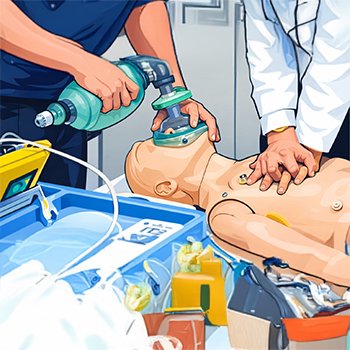
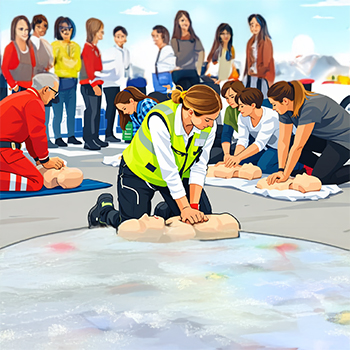
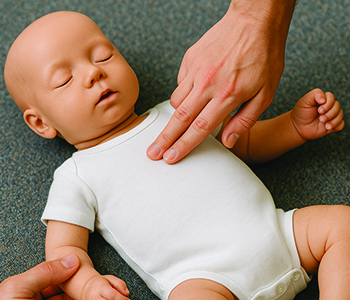
Practical demo on mannequin for easy understanding
Course Eligibility: For Allied / Paramedical / Nursing / Medical students
Description
PACE Program is an informative and engaging online course dedicated to the care and maintenance of Peripherally Inserted Central Catheter (PICC) lines. This program is designed for CVAD nurses, doctors and PICC line nurses to enhance their knowledge and skills in PICC line management, ensuring the best standards of patient care
Curriculum
This module introduces Peripherally Inserted Central Catheters (PICC lines), including their purpose and clinical significance. It covers indications, contraindications, advantages and disadvantages, pre-insertion preparation, and standard PICC line insertion bundles to ensure safe and effective vascular access.
This module focuses on evidence-based practices for ongoing care and maintenance of PICC lines. Learners will understand PICC maintenance bundles, principles of Aseptic Non-Touch Technique (ANTT), guideline recommendations, and standardized assessment, dressing, and flushing protocols to maintain catheter integrity and prevent infection.
This module addresses common complications associated with PICC lines and strategies for their prevention. Topics include catheter-related bloodstream infections (CRBSI), PICC colonization, dislodgement, vein thrombosis, phlebitis, catheter occlusion, skin injuries, needleless connector–related infections (NB-PRI), and catheter breakage.
This module emphasizes accurate documentation and effective patient education related to PICC line management. It covers documentation during insertion, dressing changes, and ultrasound guidance, along with discharge education and home-care instructions to support patient safety and continuity of care.
This module provides hands-on demonstration of best practices for PICC line care and maintenance using a mannequin. Learners will observe correct techniques, reinforce theoretical knowledge, and gain practical insight into safe handling and routine care of PICC lines in a simulated clinical environment.
Recommended Courses
Discover the courses that are making a difference in healthcare.


.jpg)

.png)



.jpeg)
.jpeg)




Frequently
Asked Questions
This course is suitable for nursing students, nursing professionals, and allied healthcare staff involved in vascular access care.
Yes, the course includes theoretical concepts along with mannequin-based demonstration of PICC line care and maintenance.
Yes, common complications and their prevention are comprehensively covered in a dedicated module.
Yes, patient education, discharge guidance, and home-care instructions are included to ensure safe continuity of care.
Yes, the course is designed to support safe clinical practice and readiness for skill-based assessments.